


The Reawakening of Fontanelle: Naples’ Most Mysterious Site Reopens
After nearly six years of silence, the tuff-stone heart of Naples is beating once again. On April 18th, the Cimitero delle Fontanelle (Fontanelle Cemetery) officially reopens its gates to the public. For those who know Naples, this isn't just the reopening of a tourist site; it is the return of a soul to a city that lives and breathes through its relationship with the afterlife.
Karen Phillips
4/14/20265 min read
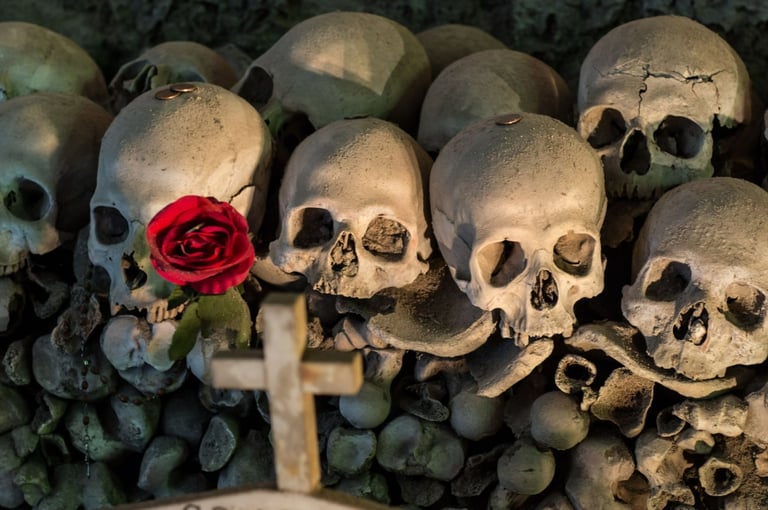
After nearly six years of silence, the tuff-stone heart of Naples is beating once again. On April 18th, the Cimitero delle Fontanelle (Fontanelle Cemetery) officially reopens its gates to the public. While I have never been there myself, I have long been fascinated by its haunting history and the incredible folklore that surrounds it. For those who know Naples, this isn't just the reopening of a tourist site; it is the return of a soul to a city that lives and breathes through its relationship with the afterlife.
A City of Tuff and Bone
Located in the vibrant Rione Sanità district, the Fontanelle Cemetery is a massive ossuary carved into a former tuff quarry. Its history is as layered as the city itself. Originally a Roman-era quarry, it became a massive burial site in the 17th century when the plague of 1656 decimated the population, followed by subsequent cholera outbreaks in the 1830s.
Over time, it became the final resting place for hundreds of thousands of Neapolitans—mostly the pezzentelli (the poor or "pauper" souls) who could not afford proper burials. But out of this macabre necessity grew one of the world's most unique expressions of folk devotion.
The Cult of the "Anime Pezzentelle"
To understand the Fontanelle is to understand the Neapolitan concept of death. It isn't a final goodbye, but a shift in the relationship. In the late 19th century, a spontaneous cult emerged where Neapolitan citizens—mostly women—began to "adopt" skulls, known affectionately as capuzzelle.
The ritual was intimate: a devotee would choose a skull, clean it, place it in a small wooden box (a scarabattolo), and offer it prayers and flowers. In return, the devotee would ask the anonymous soul for protection, guidance, or even winning lottery numbers. Some skulls became legendary, such as Il Capitano (The Captain) or Concetta, whose polished surfaces still bear witness to the thousands of hands that have caressed them in search of a miracle.
While the Catholic Church officially banned the cult in 1969 due to concerns over "paganism," the devotion never truly left the hearts of the Sanità residents. The restoration efforts over the last six years have aimed not only to secure the site’s structural integrity but to preserve this delicate cultural heritage.
Getting There: Metro & Transport
The cemetery is tucked away at the far end of the Sanità valley. While it feels a world away from the bustling main streets, it is accessible via the Naples Metro system:
Materdei Station (Line 1): This is generally the most convenient stop. From the station, it is about a 10–15 minute walk. The walk itself is a great way to see the transition from the "upper" city into the deep valley of the Sanità.
Museo Station (Line 1) / Cavour (Line 2): If you are coming from the historic center, you can get off here. It is a slightly longer walk (about 20 minutes) but takes you through the heart of the Rione Sanità, past the famous San Gennaro dei Poveri and the colorful local markets.
How to Visit & Reserve Tickets
In a change from the past, access to the cemetery is now more structured to ensure safety and a high-quality visitor experience. Booking is mandatory.
Official Website: cimiterodellefontanelle.it
Reopening Day (April 18th): Entry is free for the community march and opening day, though capacity is limited.
Regular Visits: Starting April 19th, the site is open daily (except Wednesdays) from 10:00 AM to 6:00 PM.
Ticket Options: You can choose between "Accompanied Tours" (using the official audio guide app) or "Guided Tours" with a live expert.
Languages: The booking site and materials are available in both Italian and English.
A Personal Note
I am thrilled to be visiting the Fontanelle myself later this month to see the results of these extensive restorations firsthand. There is something profoundly moving about the silence of the Sanità caves—a place where the boundary between the living and the dead feels as thin as a veil.
Would you like to learn more about the Fontanelle Cemetery the Rione Sanità? Here is a link to my Andiamotrips: The Next Stop: The Rione Sanità guide and dive deeper into the rich history, hidden gems, and local culture of this incredible Neapolitan neighborhood!
Italiano
Dopo quasi sei anni di silenzio, il cuore di tufo di Napoli torna finalmente a battere. Il 18 aprile, il Cimitero delle Fontanelle riapre ufficialmente le sue porte al pubblico. Sebbene non ci sia mai stata personalmente, sono da tempo affascinata dalla sua storia suggestiva e dall'incredibile folklore che lo circonda. Per chi conosce Napoli, questa non è solo la riapertura di un sito turistico; è il ritorno di un'anima a una città che vive e respira attraverso il suo rapporto con l'aldilà.
Una Città di Tufo e Ossa
Situato nel vivace rione Sanità, il Cimitero delle Fontanelle è un immenso ossario scavato in una ex cava di tufo. La sua storia è stratificata come la città stessa. In origine cava di epoca romana, divenne un enorme sito di sepoltura nel XVII secolo, quando la peste del 1656 decimò la popolazione, seguita dalle successive epidemie di colera del 1830.
Col tempo, divenne l'ultima dimora di centinaia di migliaia di napoletani, per lo più le "anime pezzentelle" (i poveri) che non potevano permettersi una degna sepoltura. Ma da questa macabra necessità è nata una delle espressioni di devozione popolare più uniche al mondo.
Il Culto delle "Anime Pezzentelle"
Per capire le Fontanelle bisogna comprendere il concetto napoletano di morte. Non è un addio definitivo, ma un cambiamento nel rapporto. Alla fine del XIX secolo, emerse un culto spontaneo in cui i cittadini napoletani — soprattutto donne — iniziarono ad "adottare" dei teschi, chiamati affettuosamente capuzzelle.
Il rituale era intimo: un devoto sceglieva un teschio, lo puliva, lo riponeva in una piccola cassetta di legno (uno scarabattolo) e gli offriva preghiere e fiori. In cambio, il devoto chiedeva all'anima anonima protezione, guida o persino i numeri del lotto. Alcuni teschi sono diventati leggendari, come Il Capitano o Concetta, le cui superfici lucide testimoniano ancora oggi le migliaia di mani che le hanno accarezzate in cerca di un miracolo.
Sebbene la Chiesa cattolica abbia ufficialmente vietato il culto nel 1969 per timore di "paganesimo", la devozione non ha mai lasciato il cuore degli abitanti della Sanità. Gli sforzi di restauro degli ultimi sei anni hanno mirato non solo a mettere in sicurezza la struttura del sito, ma a preservare questo delicato patrimonio culturale.
Come Arrivare: Metro e Trasporti
Il cimitero si trova all'estremità della valle della Sanità. Sebbene sembri un mondo lontano dalle strade principali, è facilmente raggiungibile con la metropolitana di Napoli:
Stazione Materdei (Linea 1): È generalmente la fermata più comoda. Dalla stazione, dista circa 10–15 minuti a piedi. La passeggiata stessa è un ottimo modo per vedere il passaggio dalla città "alta" alla profonda valle della Sanità.
Stazione Museo (Linea 1) / Cavour (Linea 2): Se arrivate dal centro storico, potete scendere qui. È una camminata leggermente più lunga (circa 20 minuti), ma vi porta attraverso il cuore del Rione Sanità, passando per il famoso San Gennaro dei Poveri e i vivaci mercati locali..
Come Visitare e Prenotare i Biglietti
Rispetto al passato, l'accesso al cimitero è ora più strutturato per garantire la sicurezza e un'esperienza di visita di alta qualità. La prenotazione è obbligatoria.
Sito Ufficiale: cimiterodellefontanelle.it
Giorno della Riapertura (18 aprile): L'ingresso è gratuito per la marcia della comunità e il giorno dell'inaugurazione, anche se la capacità è limitata.
Visite Regolari: A partire dal 19 aprile, il sito è aperto tutti i giorni (tranne il mercoledì) dalle 10:00 alle 18:00.
Opzioni Biglietto: È possibile scegliere tra "Visite Accompagnate" (utilizzando l'app ufficiale con audioguida) o "Visite Guidate" con un esperto dal vivo.
Lingue: Il sito di prenotazione e i materiali sono disponibili sia in italiano che in inglese.
Una Nota Personale
Sono entusiasta di visitare personalmente le Fontanelle alla fine di questo mese per vedere in prima persona i risultati di questi estesi restauri. C'è qualcosa di profondamente commovente nel silenzio delle cave della Sanità — un luogo dove il confine tra i vivi e i morti sembra sottile come un velo.