


One Sanctuary, Five Ways: Why Every Type of Traveler Falls in Love with Naples’ Hidden Wonder
Tucked away on this crowded lane is the Chiesa e Chiostro di San Gregorio Armeno (The Church and Cloister of Saint Gregory). To truly experience it, you have to know exactly how to navigate its secret entrances: Here is why five distinct travel personas will find their ultimate Naples experience hidden inside this sanctuary.
Karen Phillips
7/20/20266 min read
If you’ve ever walked down the narrow, chaotic cobblestones of Via San Gregorio Armeno in the heart of Naples, you know it as a dizzying sensory overload. Packed shoulder-to-shoulder with artisans selling handmade terracotta nativity scenes, shouting street vendors, and the rich aroma of espresso, it is Naples in its purest, most frantic form.
But most tourists make a critical mistake: they keep their eyes glued to the street-level shops and walk right past an incredible sanctuary.
Tucked away on this crowded lane is the Chiesa e Chiostro di San Gregorio Armeno (The Church and Cloister of Saint Gregory). To truly experience it, you have to know exactly how to navigate its secret entrances:
The Church Entrance: Hidden in plain sight at street level, often sitting unnoticed behind a large, heavy iron gate that blends right into the busy shopping stalls.
The Cloister Entrance: Located just a short walk further up the street, where you pass through a stone archway and climb a monumental staircase of 33 dark volcanic stone steps to escape the roaring city below.
I recently had the privilege of touring this "sacred fortress" through an eye-opening guided experience organized by Associazione Incantarea (you can check out their upcoming events and itineraries on the Associazione Incantarea Facebook Page).
The tour was part of the Destinazione Donna (Destination Woman) cultural initiative. This year’s theme—"Donne al Governo. Quando il potere si fa cura" (Women in Power: When Power Cures)—focused entirely on the influential, often forgotten women who shaped, ruled, and sometimes rebelled within these historic walls.
(Note: While the official Destinazione Donna tours are conducted in Italian, the church and cloister are fully open to the public, so English-speaking travelers can easily explore these incredible layers of history on their own!)
If you want to read more deep dives into the hidden history of Italy, consider subscribing to my Substack newsletter where I share untold stories and travel guides:
👉 [Link to My Substack Newsletter Here]
Because this single historic monument holds so many layers of Neapolitan identity, it appeals to completely different styles of exploring.
Here is why five distinct travel personas will find their ultimate Naples experience hidden inside this sanctuary.
1. The History Buff & Architecture Aficionado
For the traveler who lives for structural timelines, archaeological layers, and artistic movements.
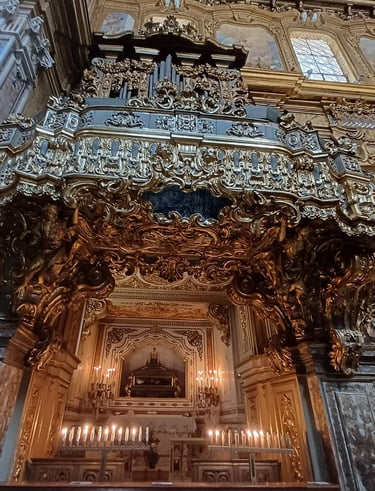
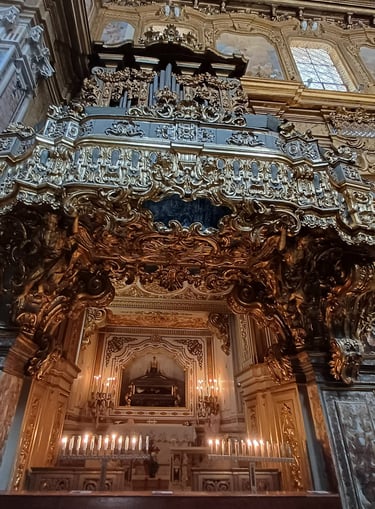
For this persona, San Gregorio Armeno is a physical timeline of Western history, sitting directly on top of the ancient Greco-Roman city of Neapolis. But its crown jewel is its jaw-dropping transformation into a masterclass of Neapolitan Baroque—an art movement famous for theatrical drama, high-contrast light and shadow (chiaroscuro), and a spectacular love of gold.
Step through the hidden street-level iron gate into the church, and you’ll find:
The Blinding Gilded Ceiling: A massive, carved wooden coffered ceiling (soffitto a cassettoni) coated entirely in shimmering gold leaf. Designed by Flemish master Teodoro d’Errico, it frames dramatic paintings of Saint Gregory's life.
Luca Giordano's Theatrical Frescoes: Painted in the 1680s, these giant murals sweep across the upper walls like a silent film, illustrating the Byzantine nuns fleeing across the sea with the saint's relics.
The Polychrome High Altar: A striking design made of inlaid colored marbles (pietre dure) and mother-of-pearl, representing the massive family wealth brought into the convent by Naples' aristocratic daughters.
2. The Slow Traveler & Mindful Seeker
For the traveler who avoids rushed itineraries and seeks moments of quiet, sensory contrast, and local peace.
Naples is beautiful, but its relentless energy can tire out even the most seasoned traveler. For the "slow traveler," entering the monumental cloister courtyard offers the ultimate sensory reset.
The transition from the screaming sirens and motorbikes of the historic center below to the utter, profound silence at the top of those 33 volcanic steps is a therapeutic experience.
Inside the sun-drenched courtyard, you will find:
The Citrus Groves (arance amare): Lush, leafy bitter orange trees fill the center of the garden. In the spring, the air is thick with the sweet perfume of orange blossoms.
The Samaritan Fountain: A monumental 18th-century marble fountain sculpted by Matteo Bottiglieri in 1733, featuring life-sized statues of Christ and the Samaritan Woman at the Well, complete with whimsically carved stone dolphins, shells, and seahorses.
The Belvederes: Elegant, elevated lookout balconies perched high near the dome. These were custom-built so the cloistered nuns, forbidden from ever leaving, could catch a cool sea breeze and look out over the Naples rooftops without ever being seen from the streets.
📸 Watch the Magic in Action:
Want to see the transition for yourself? Check out my video showing the climb up the dark volcanic stairs and the sudden reveal of the bright, silent courtyard!
👉 [Link to my Instagram Video / Reel here]
3. The Behind-the-Scenes & "Insider" Explorer
For the traveler who wants to step behind closed doors and understand how people actually lived throughout history.
Because we were on a guided tour with Associazione Incantarea, we were lucky enough to step behind the scenes into the highly private, restricted areas of the monastery. This experience offered an incredibly moving look at the daily lives of cloistered nuns throughout the centuries.
The Two-Level Choir Galleries: We climbed up to the private galleries overlooking the main church. Here, we stood in the two distinct levels of hidden choir stalls, lined with elaborate gilded wooden grates. Peering through these screens down at the high altar below was incredibly ghostly—you could feel what it was like to spend an entire life watching the world go by through a golden filter.
The Silent Refectory: Next, we walked into the historic dining hall. The heavy wooden dining tables are set up in a long U-shape running along the walls. This specific layout meant the nuns ate side-by-side in collective silence, rather than face-to-face. While they ate, sacred scriptures were read to them, not from a high pulpit, but from a simple reader's chair positioned at the back of the room.
A Living, Breathing Home: What makes this space truly magical is that nuns still live and worship here today (the sisters of the Suore Crocifisse Adoratrici dell'Eucaristia). During our visit, we were extremely respectful of their active living spaces and quiet routines, making sure to slip out of their dining hall well before their lunchtime. As we stepped back out into the central courtyard, the comforting, home-cooked aromas of their lunch began wafting through the open air—a beautiful, sensory reminder that this isn't just a cold museum, but a living home.
4. The Feminist & Storyteller Traveler
For the traveler who seeks out the unsung stories of historical women, female agency, and rebellion.
For the feminist traveler, San Gregorio Armeno is a monument to the fierce, complex women who ruled, defied, and chronicled their own lives within its walls. In an era when women had little to no societal power, this wealthy monastery was a stronghold of female autonomy. On our tour, three incredible women stood out:
👑 Saint Patricia (7th Century): A co-patron saint of Naples, Patricia was a noblewoman of Constantinople who fled her home to escape a forced imperial marriage. After shipwrecking on the shores of Naples, she dedicated her life to helping the poor. Neapolitans still visit her shrine in the church to witness her weekly blood-liquefaction miracle every Tuesday morning.
🏛️ Abbess Lucrezia Caracciolo (16th Century): When strict isolation rules (clausura) were imposed on nuns during the Counter-Reformation, Lucrezia didn't back down. Instead, she used her massive family dowry and political influence to completely redesign the monastery, commissioning the grand Baroque church and the orange-tree cloister—turning her strict enclosure into a self-sufficient, majestic palace.
🗝️ Enrichetta Caracciolo (19th Century): Forced into the convent against her will in 1840, Enrichetta refused to be silenced. She secretly bought forbidden political newspapers, smuggled out coded letters, and worked as an underground agent for the Risorgimento (Italian unification). The day Naples was liberated, she gained her freedom and wrote a European-wide bestselling memoir exposing the dark side of forced monastic life.
5. The Foodie & Culinary Heritage Explorer
For the traveler whose itinerary is built around authentic flavors, culinary origins, and the cultural history of food.
You might not expect an active monastery to be a foodie destination, but this cloister is the holy land for Neapolitan pastry lovers. It is the birthplace of Pastiera Napoletana, the rich, fragrant ricotta and cooked grain tart that defines Easter in southern Italy.
The Orange Blossoms: The cloistered nuns harvested the blossoms of the bitter orange trees planted in this very courtyard to distill the orange flower water (acqua di fior d'arancio) that gives the Pastiera its signature, aromatic perfume.
The "Ruota" (The Wheel Window): Because the nuns were strictly cloistered and could never show their faces to the public, they interacted with locals through a rotating wooden drum built into the wall. Locals would place coins on the wheel, the nuns would spin it, and a hot, freshly baked Pastiera would appear from the other side.
The Secret Methods: Legends say the nuns were so dedicated to perfecting the pastry dough that they would knead it directly on the cold marble slabs of the cloister benches to keep the butter perfectly chilled.
Which San Gregorio Armeno traveler are you?
Whether you want to lose yourself in gold-leaf Baroque architecture, step back in time in the quiet refectory, or learn about the rebellious secret agents of the Italian unification, this Neapolitan masterpiece is waiting to be discovered.
On your next trip to Naples, do yourself a favor: don't just stay on the street level. Find the hidden gate to the church, and climb those 33 steps to the cloister.
Which of these five traveler personas fits you the best? Which woman's story inspired you the most?